
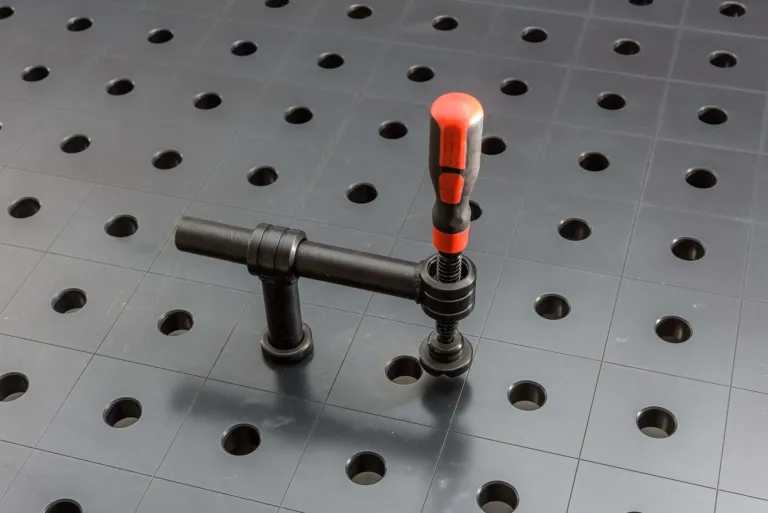
Clamps and clamping bolts
Welding table clamps press the workpiece onto the table, quick-release clamping bolts connect stops and squares to the …
Guide: hole systems
A 28 mm or 16 mm welding table differs in the diameter of its holes and therefore in clamping force, accessory weight and field of use. Here you find the comparison, the limits of compatibility and a decision guide.
Last updated
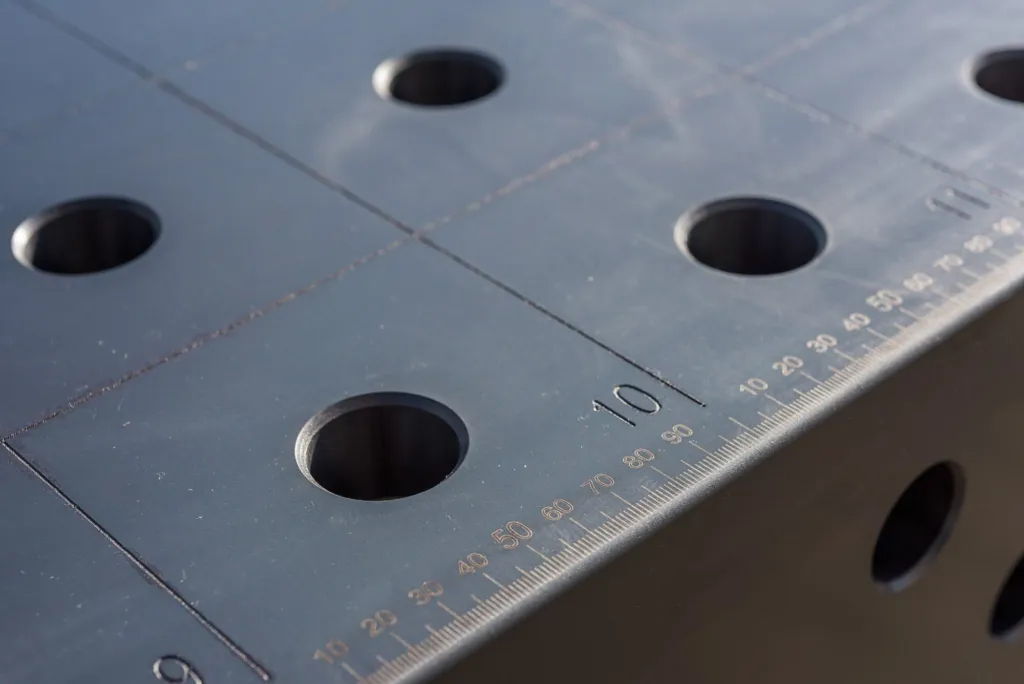
In short: System 16 and System 28 refer to the hole diameter of a welding table: 16 mm or 28 mm. System 28 usually comes with a 100 mm grid and thick plates and is meant for heavy components and high clamping forces. System 16 is lighter and has a finer grid. Accessories only fit their own system.
The number after the word System gives the diameter of the system holes in the table top and side walls, 16 mm or 28 mm. All clamping tools are designed for this diameter: quick-release clamping bolts, stops, clamping squares, clamps and V-blocks. Some manufacturers write D16 and D28 instead, and some also offer a System 22.
A system also includes the grid pitch, meaning the distance between holes from centre to centre, and the plate thickness. These values differ by manufacturer and product range. The widespread combinations are shown in the table below. Terms such as system hole, grid pitch or side wall are explained in the glossary of fixture table, clamp table and 3D welding table.
The key difference between System 16 and System 28 is the force that bolts and clamping tools can transmit, and therefore the size of the components a table is meant for. The values in the table are common on the market; individual manufacturers deviate from them.
| Feature | System 16 | System 28 |
|---|---|---|
| Hole diameter | 16 mm | 28 mm |
| Typical grid | often 50 x 50 mm | often 100 x 100 mm, sometimes 50 mm or diagonal |
| Typical plate thickness | usually around 12 mm | usually around 25 mm, lighter ranges 12 to 15 mm |
| Typical side wall height | usually 100 or 150 mm | usually 200 mm |
| Typical use | small and medium parts, thin sheet, light tube and profile frames, training | metal and steel fabrication, railings, gates, stairs, heavy frames and assemblies |
| Accessory weight | light, quick to reconfigure | heavier, large clamping squares weigh over 10 kg |
| Clamping force | lower, sufficient for light parts | high, also for large forces such as straightening |
| Table weight | comparatively low | high, several hundred kilograms to over a tonne depending on format |
System 28 is the better choice if you clamp heavy or large components, straighten parts on the table or transfer high forces through the clamping tools. A bolt with a diameter of 28 mm has roughly three times the cross-section of a 16 mm bolt and, with the same design, can take correspondingly more force. According to the shop, the quick-release clamping bolts from die schmiede, for example, are rated for a shear force of 220 kN and a tensile force of 25 kN.
On top of that come thick, stiff plates that hardly deflect under load, and a wide choice of accessories, because 28 mm holes and a 100 mm grid are widespread. The coarser grid is compensated by stops with a millimetre scale and by diagonally drilled plates. The downside is weight: according to the shop, a 43-part accessory set from die schmiede weighs approx. 51 kg, and a 750 L stop and clamping square alone weighs 13.6 kg.
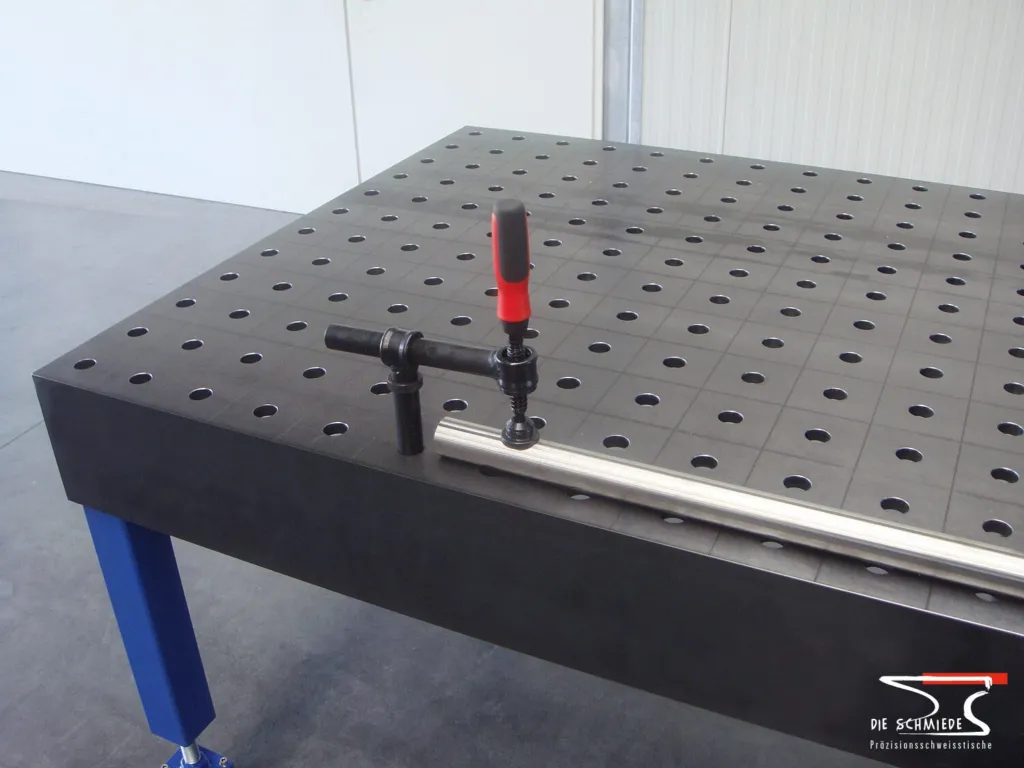
System 16 is enough, and often more practical, if you mainly weld small, light parts and reconfigure frequently. The accessories are considerably lighter, changeovers are quicker, and the finer grid offers more positions for stops on a small area. A System 16 table of the same format weighs less, which makes transport, installation and mobile use easier.
System 16 has its limits with heavy components: thinner bolts transmit less force, and thinner plates give way more readily under high point loads. If you make light parts today and want to grow into steel fabrication later, take that into account when you choose.
No, clamping bolts and accessories are designed for one hole diameter and only clamp securely in the matching system. A 16 mm bolt finds no hold in a 28 mm hole, and a 28 mm bolt does not fit into a 16 mm hole. If you use both systems, you need two separate sets of accessories.
Within System 28, accessories from different manufacturers can often be combined, because 28 mm holes and a 100 mm grid are widespread. The manufacturer die schmiede explicitly describes its accessories as compatible with other tables that use a 28 mm hole system. Still check three points:
Clamping tools for your table are listed under Clamps and clamping bolts and Stops and clamping squares.
Decide according to your heaviest regular components and the accessories you already own. The comparison sums up the key criteria.
All welding tables from die schmiede are built in System 28, with 28 mm holes and a grid of 100 x 100 mm. As a metal fabrication business, die schmiede makes railings, gates and stairs itself, exactly the kind of components System 28 is designed for.
There are two plate thicknesses: the Standard table with 15 mm and the PRO table with 25 mm. On the PRO table the holes are countersunk by 3 mm, the holes in the side walls are spaced 50 mm apart, and the top is optionally available with diagonal holes.
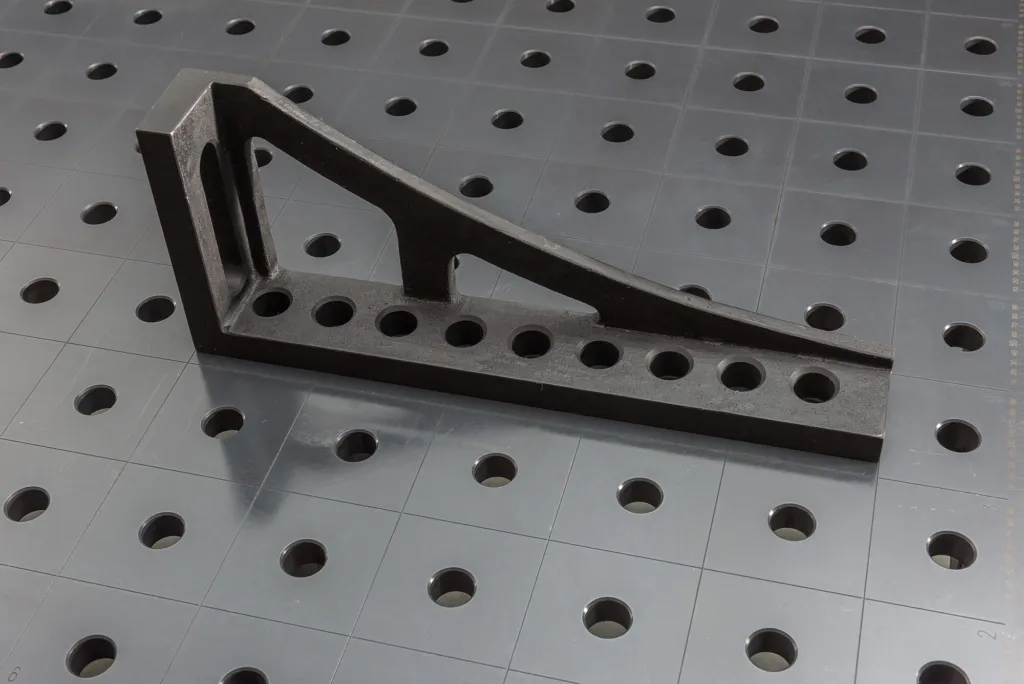
Standard with 15 mm or PRO with 25 mm plate thickness, both with 28 mm holes in a 100 mm grid and matching accessories from one source. Request a quote for your country, or view the range in the online shop, which is in German and delivers within Germany only.
No, the accuracy of a welding table does not depend on the hole diameter but on how it is made: flatness of the plate, dimensional accuracy of the holes and evenness of the grid. The finer grid of System 16 offers more positions on a small area, but it does not automatically make components more accurate. In System 28, stops with a millimetre scale compensate for the coarser grid.
For hobby welders, the choice depends mainly on the workpieces. If you weld small parts, brackets or thin sheet, System 16 works well and saves weight. If you build trailers, gates, stairs or heavy frames, System 28 is the better fit. Bear in mind that a System 28 table weighs several hundred kilograms and needs a floor that can carry it.
Yes, small parts can also be positioned securely on a System 28 table, for example with short stops, V-blocks and clamps. The coarser grid is compensated by stops with a millimetre scale or with several system holes, which are 50 mm apart on the universal stops from die schmiede. For very small, delicate parts, however, System 28 accessories are comparatively heavy.
System 22 is an intermediate size with 22 mm holes offered by some manufacturers. It is aimed at users who find System 16 too light and System 28 too heavy. Here too, accessories only fit their own hole diameter. Before buying, check how large the range of accessories is in the system you want and whether you will still be able to buy parts in a few years.
A switch is worth it if your components get heavier and System 16 reaches its limits in clamping force or plate stiffness. Bear in mind that your existing accessories cannot be used on the new table. A practical solution is to keep the System 16 table for small parts and add a second table in System 28 for heavy work.
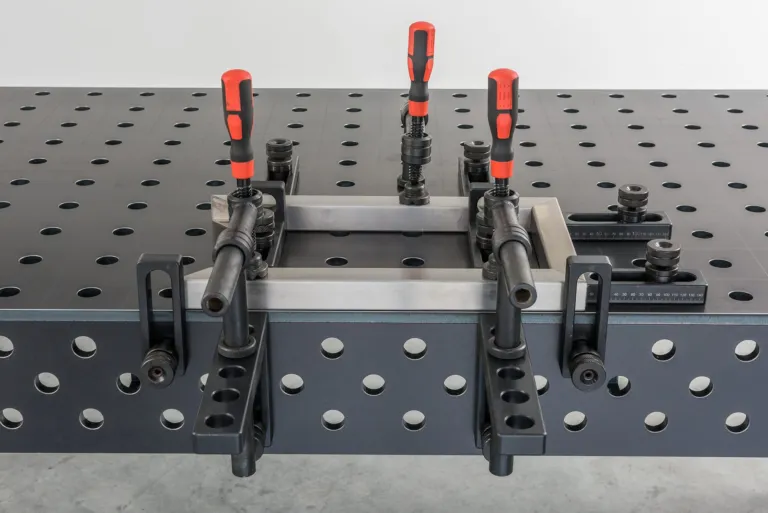
Welding table clamps press the workpiece onto the table, quick-release clamping bolts connect stops and squares to the …
When buying a welding table, plate thickness, format and hole system matter most, followed by surface, weight, working …
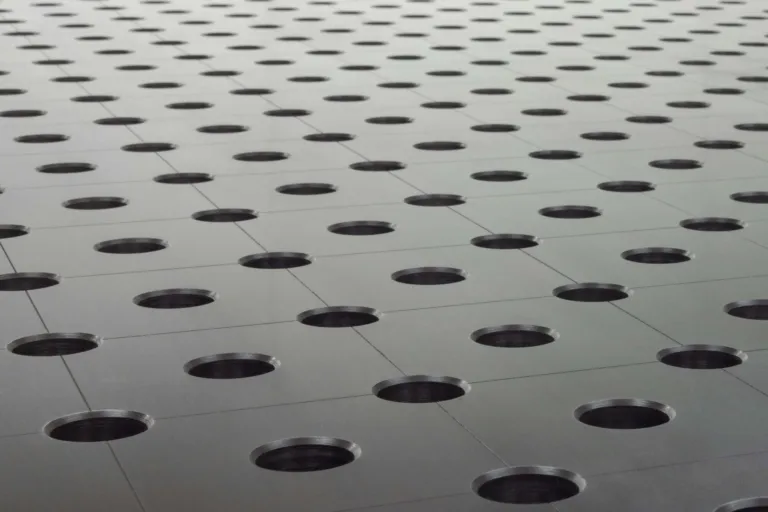
Fixture table, welding fixture table, clamp table and 3D welding table often mean the same thing, but not …
5.012 reviews on Google
Ich kam mit einem kleinen außergewöhnlichen Anliegen und freue mich über so viel spontane Hilfe, Freundlichkeit und Professionalität, DANKE!
Tanja B.View on Google: review by Tanja B. (opens in a new tab)
Nicht mehr daran geglaubt - aber es gibt sie noch ! Deutsche Wertarbeit !! Rechtzeitig zum Frühlingsanfang konnten wir unsere "Wasserdichte Balkonanlage" mit Außentreppe einweihen und sind vollends begeistert von der…
Hubert L.View on Google: review by Hubert L. (opens in a new tab)
Eine Super-Schmiede, die auch Außergewöhnliche Produkte kreieren kann. Meine Kreuz, die ich zur Entstörung von Elektrosmog wurden auf Millimeter genaue Einstellung geschmiedet. Das war eine Klasseleistung! Jetzt kann ich wieder…
GoggoschelleView on Google: review by Goggoschelle (opens in a new tab)
Unsere verbogene Garagentorstange wurde sehr kurzfristig gerade gerichtet. Nettes Team. Gerne wieder.
knecht116View on Google: review by knecht116 (opens in a new tab)
Sehr kompetente Beratung ohne etwas verkaufen zu wollen! In Zukunft erste Anlaufstelle!
Wir haben im Januar einen Balkon mit Geländer und Treppe zum Garten erhalten und sind mit der Arbeit von "Die Schmiede" vollstens zufrieden. Die gesamte Abwicklung von Planung bis Montage hat problemlos geklappt. Wir können Herrn…
Daniela L.View on Google: review by Daniela L. (opens in a new tab)
Top Firma, zuverlässig, fair, preiswert, spitze Arbeit… immer wieder gerne!
Dieter H.View on Google: review by Dieter H. (opens in a new tab)
Wann immer ich Hilfe bei der Reparatur von Gartendekorationen aus Metall benötigte, wandte ich mich immer an die Schmiede. Warum? denn die Mitarbeiter sind sehr hilfsbereit und immer hilfsbereit bei Metallarbeiten. Hier sind Sie…
Super freundlich und die Schweißtische haben eine Top Qualität. Weiter so !
Michael M.View on Google: review by Michael M. (opens in a new tab)
Super höfliche Fachkräfte die tolle Arbeit geleistet haben in kurzer Zeit. Der Chef war vor Arbeitsbeginn persönlich vor Ort und jederzeit erreichbar! Qualität zu einem defitnitv fairen Preis. Top Firma! Wir sind mit unserem Zaun…
Damla K.View on Google: review by Damla K. (opens in a new tab)
Wir haben vor einem Jahr ein neues Balkongeländer von "Die Schmiede" erhalten. Alles war super, der Chef persönlich hat Maß genommen und nach nur 4 Wochen erfolgte direkt die Montage. Das alles zu einem Super Preis und man hat…
Philipp B.View on Google: review by Philipp B. (opens in a new tab)
Reviews are shown in their original language (German). This is a selection of the most recent Google reviews with 4 or 5 stars and a written comment (up to 12). Reviews have not been checked for authenticity.